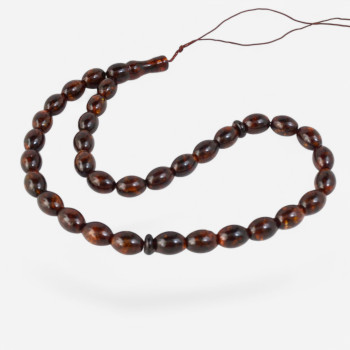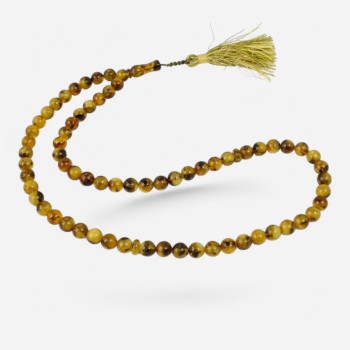

Islamic prayer beads, also known as Misbaha, Tasbih, or Subha, are an important spiritual tool used by Muslims. These beads help individuals focus during dhikr, the remembrance of Allah, by repeating divine names, phrases, or prayers. Typically, a set consists of 33 or 99 beads, representing the 99 names of Allah. At the end of the string, there is often a separator bead and sometimes a tassel.
Islamic prayer beads, also known as Misbaha, Tasbih, or Subha, are an important spiritual tool used by Muslims. These beads help individuals focus during dhikr, the remembrance of Allah, by repeating divine names, phrases, or prayers. Typically, a set consists of 33 or 99 beads, representing the 99 names of Allah. At the end of the string, there is often a separator bead and sometimes a tassel.
The practice of using prayer beads dates back to early Islamic history and is deeply rooted in tradition. Muslims often recite phrases such as "SubhanAllah" (Glory be to God), "Alhamdulillah" (Praise be to God), and "Allahu Akbar" (God is the Greatest) while counting the beads. This repetition helps to maintain focus and cultivate inner peace. It is a spiritual exercise that strengthens one’s relationship with God. Though commonly used during personal devotion, Tasbih beads are also used in group settings or after formal prayers. Their purpose is not just counting but also encouraging mindfulness and meditative awareness.
Weight: 38.6 grams, Beads: 33 balls, Size: 9 x 15,2 mm
Color: white, Amber: polished, Code: 12364
For many, the rhythmic motion of the fingers on the beads has a calming effect. It provides a physical anchor during spiritual reflection. The beads are made from various materials, including wood, stone, glass, or even precious gems. Each material can add personal or symbolic meaning to the prayer experience. Some people prefer natural textures that connect them with the earth and creation. Others may choose ornate designs to honor the beauty of faith. In some cultures, prayer beads are passed down through generations, becoming family heirlooms. They can hold emotional and spiritual significance beyond their use in prayer. Receiving a set of prayer beads can be a cherished gift among Muslims. It is often given on religious occasions such as Eid or during Hajj. While the primary purpose remains spiritual, Islamic prayer beads also serve as a cultural symbol.
They are often seen in Muslim homes, mosques, and even worn around the wrist or neck. For those practicing Islam, they represent a constant reminder of God’s presence and mercy. In daily life, they support both spiritual discipline and inner serenity. In conclusion, Islamic prayer beads are much more than decorative items. They play a central role in dhikr, promoting mindfulness, peace, and connection with the divine. Whether used in solitude or shared settings, they remain a timeless expression of Islamic spirituality. Their continued use reflects the deep personal and communal values of the Muslim faith.
Data sheet
No customer reviews for the moment.
You might also like